
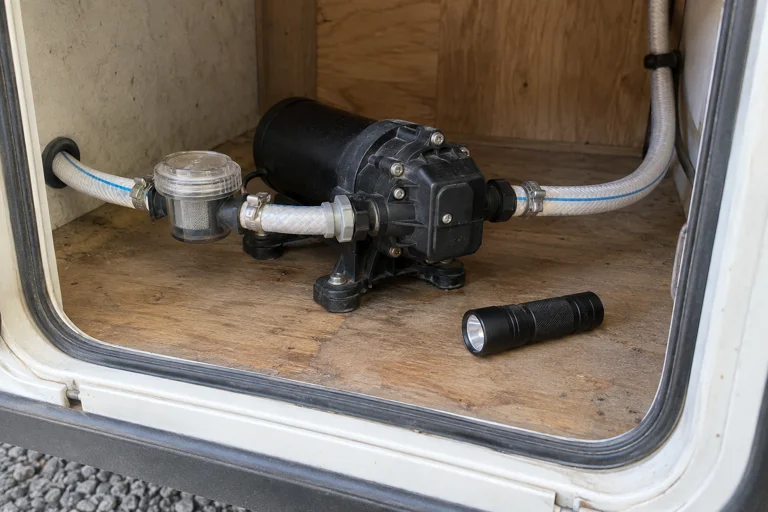
You finish washing dishes, close the faucet, and the RV water pump stops. A little later it runs for a second, stops again, and repeats even though nobody has touched a tap.
With a conventional pressure-controlled freshwater pump, that pattern usually means pressure is falling after the pump shuts off. The pump restores it, then the process starts over. The question is where that pressure is going, not which replacement pump to buy.
First confirm that no appliance is drawing water automatically. An ice maker or another installed water-using appliance can create a real demand without anyone opening a faucet. Also make sure the sound comes from the freshwater pump, not a separate water-heater circulation pump.
Separate three sounds that owners call cycling
Stops, stays quiet, then briefly restarts with everything closed: investigate pressure loss and unintended water flow. A dry floor doesn't rule out either one.
Pulses while a faucet is barely open: the pump is supplying an actual demand. Restricted flow and the pump's control design become relevant. That isn't the same symptom as a restart in an otherwise idle system.
Runs continuously and never reaches shutoff: ask whether water reaches the fixtures at all. A supply or priming problem needs a different investigation from a system that delivers water, shuts down normally, then loses pressure.
The manufacturer's Flojet 4305/4325 manual separates pulsating flow from failure to shut off and failure to prime. These are older model-specific instructions, not universal settings for every pump.
Look for the water before touching the pump
Check the places you can see safely: faucet spouts, the toilet bowl, under-sink plumbing, the outside shower, and accessible drain outlets. A small trickle into a toilet or down a sink drain doesn't have to wet the floor to create demand.
Close the outside shower's actual hot and cold controls, not just its handheld pause button. Note any water at the city-water inlet when the supply hose is already disconnected. Don't press the inlet's internal valve or remove fittings while the system is pressurized.
Use a flashlight to inspect accessible cabinet floors and plumbing compartments. Fresh moisture, staining, a swollen panel edge, or water appearing beneath the RV helps locate the next inspection. Don't crawl underneath an unsupported RV or cut open its underbelly to chase a drip.
If you find an active leak, turn the pump off and shut off the city-water supply if connected. Keep clear of wet electrical equipment. A brief, quiet pump cycle is still capable of replenishing a leak while you're away.
No visible leak doesn't clear the valves
Water can move backward internally instead of escaping onto the ground. Pentair's Shurflo 4008 manual identifies valve leak-back as a cause of occasional cycling with faucets closed. It also lists pressure-side plumbing, toilets, and valves among the checks for unwanted operation.
That makes internal leakage a possibility, not a diagnosis. Replacing the pump before checking the connected plumbing risks leaving the actual leak untouched. Conversely, a pump that produces good flow can still have a sealing problem after it stops.
On an RV with a tank-fill or water-management valve, confirm its position against the RV's own diagram. Don't copy handle positions from a different coach. If the freshwater tank also fills unexpectedly on city water, report that separately; tracing the installed plumbing matters before deciding which valve is passing water.
The timing helps, but it isn't a leak-size measurement
Tell the technician whether the restart happens every few seconds or only after a much longer quiet period. Also note whether the interval has changed since the problem began. There's no universal acceptable interval that makes unexplained cycling normal.
The amount of stored pressurized water differs between installations. An accumulator, if fitted, changes how much water can be delivered before another start. So two RVs with similar cycle intervals don't necessarily have the same fault or leak rate.
Record whether this started after storage, winterization, filter service, or other plumbing work. That history helps identify what changed without assuming the newest part must be defective. A symptom that persists after the system has been filled and used normally deserves attention.
Don't adjust the pressure switch to hide the symptom
Turning an adjustment screw until the noise changes can erase a useful clue without repairing anything. The Shurflo 4008 manual reserves bypass adjustment for a professional with gauges and warns that incorrect settings can prevent shutoff. Leave settings alone until the cause is understood.
Adding an accumulator isn't a leak repair either. Pump designs differ, and some bypass pumps don't require one. Identify the pump before following an upgrade recommendation.
What professional diagnosis should establish
A technician should determine whether pressure actually decays while demand is absent, then distinguish the pump assembly from the plumbing it supplies using a safe, model-appropriate test setup. If pressure holds but the motor still starts unexpectedly, the pressure control and electrical command deserve investigation.
Those findings lead to different repairs. A leaking fixture, a valve that doesn't seal, and an incorrect control response are not interchangeable explanations. Opening pressurized lines, isolating the pump outlet, and electrical testing are not owner checks in this guide.
For mobile RV plumbing diagnosis, send the pump model, cycle pattern, whether city water was connected, recent plumbing work, and photos of any moisture. If the real complaint is inconsistent hot water rather than idle pump cycling, our RV water-heater troubleshooting article follows that separate diagnostic path.
Questions worth settling before service
Can I leave the pump on overnight?
With unexplained cycling, leave it off when you aren't actively supervising water use. Switching it off limits further pumping; it doesn't repair the fault or remove water already in the system. Don't switch to city water as a workaround for a suspected leak.
Does normal water pressure mean the pump is good?
It means water is being delivered under those conditions. Holding pressure after shutoff is a separate question. A useful service report describes both, rather than simply saying the pump works.
Should I replace the entire pump?
Only after diagnosis shows what failed and whether a suitable repair is practical. Request mobile RV service if the cause remains unclear, the cycling continues, or you find moisture. Include your location so we can review the service request.